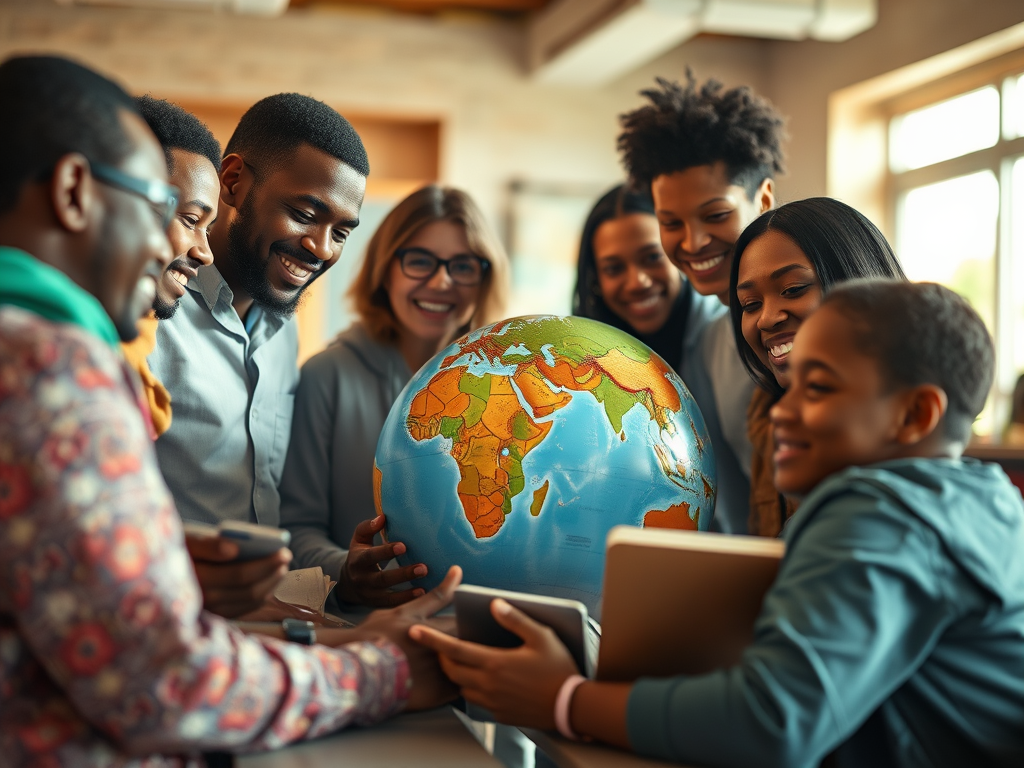
In a world facing challenges that range from personal struggles to global conflicts, education has consistently proven itself as the most powerful tool for change. At the Education for Peace Foundation, we believe that education, especially when it equips individuals with English proficiency, has the potential to bridge divides and foster unity across diverse backgrounds. English, as an international language, provides a universal medium for communication, enabling people to connect, collaborate, and share solutions to pressing issues that affect individuals and societies worldwide.

Education for Peace
Education as a Personal Tool for Growth
Education opens the door to self-discovery and personal growth. It empowers individuals to make informed choices, enhancing their ability to pursue meaningful careers and live fulfilling lives. Through education, people acquire the skills and knowledge they need to overcome obstacles, develop resilience, and reach their full potential. Learning English, in particular, expands these opportunities by connecting people to a wealth of global resources, knowledge, and support systems.
Imagine a world where every individual has the means to better themselves—where language barriers no longer stand in the way of accessing information, communicating with others, or expressing ideas. That world becomes more attainable through education.
Local Empowerment and Community Building
Locally, education strengthens communities by promoting understanding, tolerance, and empathy. When individuals are empowered through learning, they become more actively involved in community development, contributing to social cohesion and resilience. English proficiency allows communities to engage with diverse populations, facilitating collaboration and the exchange of ideas with neighboring regions and international partners. As local communities become more informed and connected, they can address pressing issues like poverty, health, and sustainability with broader perspectives and more effective strategies.
National Development and Stability
On a national scale, education contributes to stability and progress. Educated citizens are better equipped to participate in civic life, advocate for their rights, and hold leaders accountable. Education reduces inequality, promotes economic growth, and fosters a spirit of unity and pride. By adopting English as a common language of communication, nations can facilitate diplomacy, international trade, and cooperation, making them more resilient in the face of global challenges. Nations that prioritize education build a foundation for prosperity and peace that benefits all citizens.
Global Understanding and World Peace
The journey toward world peace begins with mutual understanding, which education promotes. By educating citizens worldwide and equipping them with a shared language, we can dismantle misconceptions, reduce biases, and encourage respect across cultures. English serves as a bridge that connects diverse communities, making it easier to discuss and address global issues such as climate change, public health, and humanitarian crises. When people from different backgrounds can understand and empathize with one another, they are more inclined to pursue peaceful solutions and work together for a brighter future.
Our mission at the Education for Peace Foundation is to help create a world where education serves as a beacon of hope and unity. We envision a world where people are not divided by language barriers, but united by a shared commitment to learning and peace.
In an interconnected world, the power of education cannot be overstated. Through learning, we find common ground, develop compassion, and build the skills necessary to solve the challenges that impact us all. At the Education for Peace Foundation, we are committed to making education accessible and meaningful, emphasizing English as an international language to bridge gaps, build connections, and inspire peace. Join us in our mission to empower global citizens and work together toward a more peaceful world.
Discover more from EDUCATION FOR PEACE FOUNDATION
Subscribe to get the latest posts sent to your email.