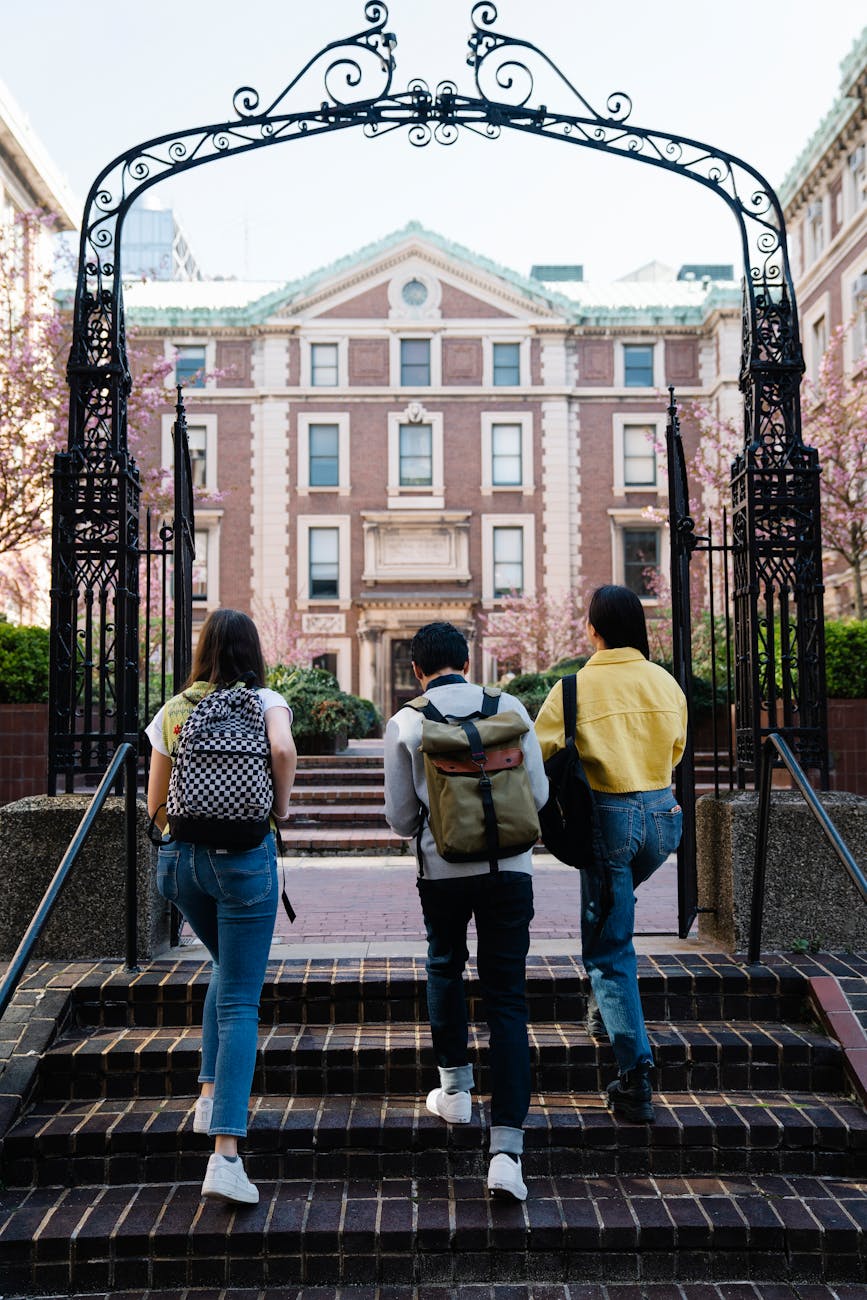
The Student Council Election
60 items · 60 minutes · Speaking 50 points · Reading 50 points · follows the TGAT1 blueprint
How it works. This practice test follows the structure of the real TGAT1 English Communication test: Question–Response, short and long conversations, text completion, and reading comprehension. All parts share one setting, so the people and places you meet in Part 1 return in Part 2. Start the timer if you want exam conditions, answer every item, then press Check My Score.
ข้อสอบเสมือนจริงตามโครงสร้าง TGAT1 การสื่อสารภาษาอังกฤษ 60 ข้อ 60 นาที ทุกส่วนเล่าเรื่องในโลกเดียวกัน ตัวละครจากบทสนทนาจะกลับมาในบทอ่าน กดเริ่มจับเวลาหากต้องการฝึกเหมือนวันสอบจริง ทำให้ครบแล้วกด Check My Score เพื่อดูคะแนนและคำอธิบายทุกข้อ
Part 1A · Question–Response: Campaign week
Mai, a Grade 11 student in Nakhon Si Thammarat, runs for president of her school’s student council. Choose the most appropriate response to each line she hears or says.
Part 1B · Short conversation 1: The decision
Choose the best option to complete the conversation.
Nut: Mai, applications for student council close on Friday.
Mai: I’m thinking about it, but I’m not sure anyone would vote for me.
Nut: Are you joking? You organised the whole sports day last year.
Mai: All right. If you’ll be my campaign manager, .
Nut: Deal!
Part 1B · Short conversation 2: Listening first
Choose the best option to complete the conversation.
Mai: Before we write our policies, I want to ask students what they actually want.
Nut: We could put a survey on the school page.
Mai: Good idea. But not everyone uses social media, so we should also paper forms.
Nut: True. The younger students mostly don’t have phones.
Part 1B · Short conversation 3: The survey results
Choose the best option to complete the conversation.
Nut: The survey results are in. Over six hundred students .
Mai: That’s amazing. What’s the biggest issue?
Nut: Shade. Students waiting for buses after school have nowhere to stand the sun.
Mai: I didn’t expect that.
Nut: Canteen prices came second, and toilets came third.
Mai: Then shade will be our first promise.
Part 1C · Long conversation 1: Meeting the adviser
Choose the best option to complete the conversation.
Kru Supa: Mai, I’ve read your policies. The shade idea is excellent, but how will you pay for it?
Mai:
Kru Supa: That’s a good start. But the school can’t promise money that hasn’t been approved.
Mai: Then maybe we could ask the parents’ association part of the cost.
Kru Supa: That’s possible. They funded the new library chairs last year.
Mai: Could you introduce me to the association’s chairperson?
Kru Supa: Of course. Just remember that a good leader things she can’t deliver.
Mai: I understand. I’ll say that we will try, not that it’s guaranteed.
Kru Supa: Honest promises build more trust than big ones.
Part 1C · Long conversation 2: The candidates’ debate
Choose the best option to complete the conversation.
Moderator: Arm, you’ve promised to cancel the rule about hair length. Mai, what’s your position?
Mai: But I don’t think the student council can cancel a school rule on its own.
Arm: Why not? The council the students.
Mai: It does, but rules are decided by the school board. we should collect students’ views and present them to the board.
Arm: That sounds slow. Students want change now.
Mai: I understand that. If we promise something we can’t deliver, students will stop trusting the council.
Moderator: Arm, would you work with Mai if she won?
Arm: Of course.
Part 2A · Text completion 1: The election notice
Choose the best word or phrase for each gap in the text.
Student Council Election: Important Information
The student council election will take place on Friday 21 November. All students from Grade 7 to Grade 12 are to vote.
Voting will take place in the main hall between 8:00 and 15:00. Each student must show a student card receiving a ballot paper. Votes are secret: no one, including teachers, will see how you vote.
Candidates may put up posters only on the official notice boards. Posters on walls, trees or classroom doors will be removed. Candidates must not offer gifts, food or money exchange for votes. Any candidate who breaks this rule will be disqualified.
the votes have been counted, the results will be announced at the school assembly on Monday. The candidate with the most votes will become president, and the second-placed candidate will become vice-president.
Every vote matters. Last year, the president won only eleven votes. Make your voice heard, let others decide for you.
Part 2A · Text completion 2: Mai’s campaign speech
Choose the best word or phrase for each gap in the text.
“A Council That Listens” · Mai’s speech to the school assembly
Good morning, everyone. Three weeks ago, my friend Nut and I asked you a simple question: what would make your school life better? More than six hundred of you . Some of your answers surprised me.
I expected you to talk about rules or homework. , the most common answer was shade. Every afternoon, hundreds of students wait for buses under the full sun. Some of the youngest students have fainted. This is not a small problem, and it is one we solve together.
I will not promise you things I cannot deliver. A student council cannot build a roof by itself, and it cannot cancel school rules the school board agrees. But it can do something just as important: it can make sure your voice reaches the people make decisions.
If I am elected, I will set up a suggestion box in every building and report back to you every month on what has done with your ideas. I will work with the parents’ association to fund shade for the bus stop, and I will work with every other candidate, who wins today.
Democracy is not only about voting once a year. It is about every day. Thank you.
Part 2B · Reading 1: The election results
Read the text and answer the questions.
Student Council Election Results · Announced Monday 24 November
Total eligible voters: 1,812 · Votes cast: 1,394 · Turnout: 77%
Mai Saengthong (Grade 11): 701 votes (50.3%) · Elected President Arm Chaiyaporn (Grade 12): 668 votes (47.9%) · Elected Vice-President Spoiled ballots: 25 (1.8%)
Turnout rose from 61% last year, the highest in the school’s history. The election committee believes the increase was partly due to the candidates’ public debate, which was watched by more than 900 students online.
The new council will hold its first meeting on 1 December. All students are welcome to observe council meetings, which take place on the first Monday of each month in Room 105.
Part 2B · Reading 2: An article on youth participation
Read the text and answer the questions.
Why Student Councils Matter
To many students, a student council election may seem like a popularity contest with little real power. Yet researchers who study democracy argue that school councils can play an important role in preparing young people for public life.
The reason is simple: democracy is a skill as well as a system. Voting, debating, negotiating and accepting defeat are all behaviours that must be learned. Schools are often the first place where young people practise them. Studies in several countries have found that students who take part in school decision-making are more likely to vote and to volunteer as adults.
However, the benefits depend on how councils are run. When councils are given no real responsibilities, students quickly learn that participation is pointless. Researchers call this “tokenism”: giving young people the appearance of a voice without any actual influence. In contrast, councils that manage a small budget, consult other students and report back on their work teach a much more powerful lesson: that ordinary people can change their surroundings.
Good councils also teach how to lose. In a healthy democracy, losing candidates accept the result and continue to contribute. A student who learns at sixteen that a rival can become a partner has learned something many adults never do.
For teachers, the challenge is to give students real responsibility while helping them understand the limits of their power. A council that promises everything and delivers nothing may do more harm than having no council at all.
Part 2B · Reading 3: The council’s first report
Read the text and answer the questions.
Student Council Monthly Report · December
Dear students,
As promised, here is our first monthly report. Thank you for the 214 suggestions you placed in the new suggestion boxes this month. We have read every one.
Shade at the bus stop: The parents’ association has agreed to pay for half of a roof for the bus waiting area. The school will consider paying for the other half at its budget meeting in February. We cannot guarantee the result, but the school director has called the idea “a priority”.
Canteen prices: The canteen has agreed to publish its prices and portion sizes every week. We will compare them with prices at other schools in the province and share the results with you in January.
Hair rules: Vice-President Arm Chaiyaporn has collected the views of over 500 students. He will present them to the school board on 15 January. The board will decide whether to review the rules.
What we could not do: Many of you asked for longer lunch breaks. This would require changes to the national timetable, which the council cannot make. We have passed your comments to the director.
We will report again in January. Our meetings are open to everyone.
Mai Saengthong, President, and the Student Council
| Section | Correct | Points |
|---|
Review every item
Discover more from EDUCATION FOR PEACE FOUNDATION
Subscribe to get the latest posts sent to your email.