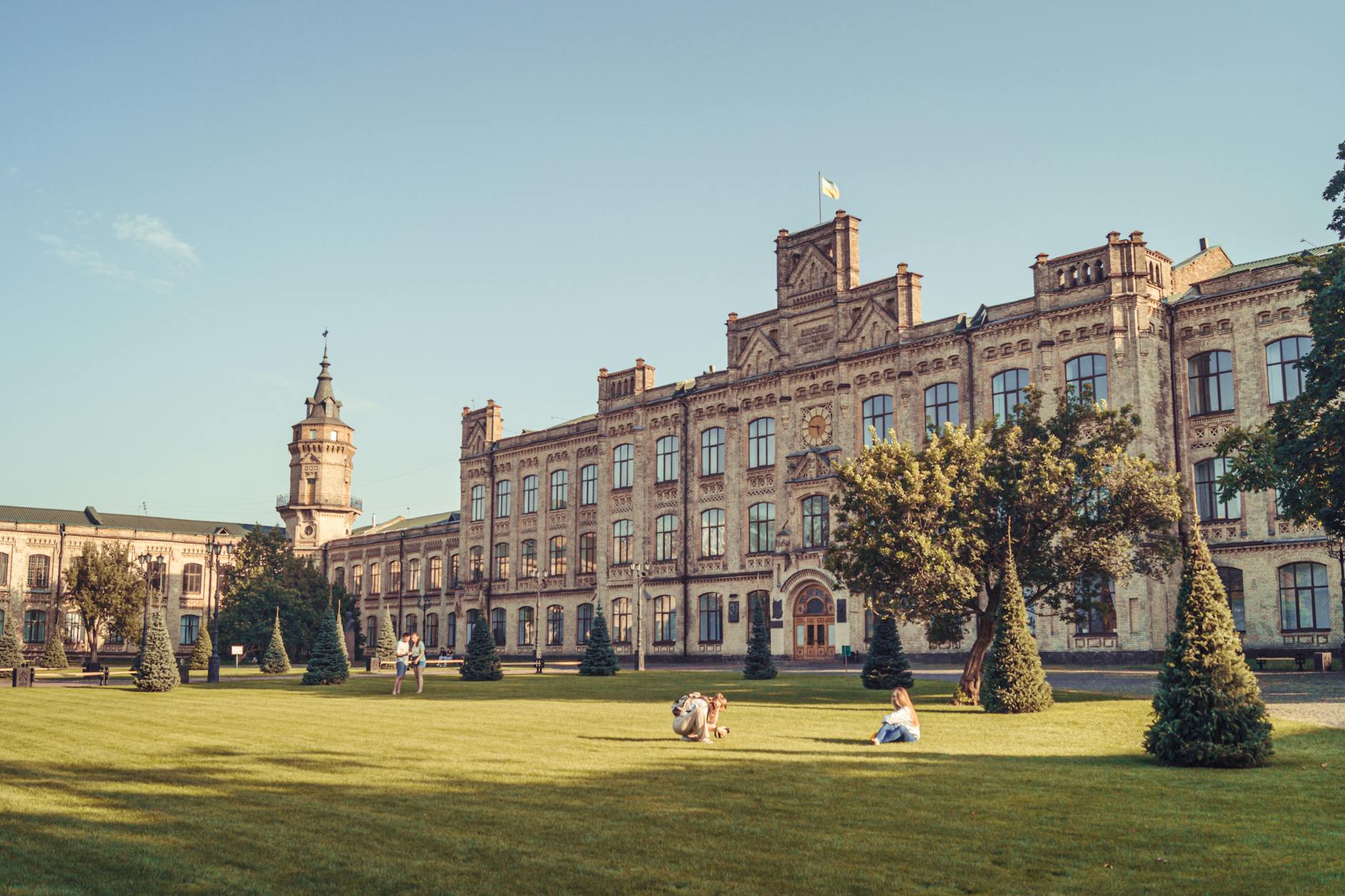
A Day in Old Ayutthaya
60 items · 60 minutes · Speaking 50 points · Reading 50 points · follows the TGAT1 blueprint
How it works. This practice test follows the structure of the real TGAT1 English Communication test: Question–Response, short and long conversations, text completion, and reading comprehension. All parts share one setting, so the people and places you meet in Part 1 return in Part 2. Start the timer if you want exam conditions, answer every item, then press Check My Score.
ข้อสอบเสมือนจริงตามโครงสร้าง TGAT1 การสื่อสารภาษาอังกฤษ 60 ข้อ 60 นาที ทุกส่วนเล่าเรื่องในโลกเดียวกัน ตัวละครจากบทสนทนาจะกลับมาในบทอ่าน กดเริ่มจับเวลาหากต้องการฝึกเหมือนวันสอบจริง ทำให้ครบแล้วกด Check My Score เพื่อดูคะแนนและคำอธิบายทุกข้อ
Part 1A · Question–Response: On the field trip
Tar, a Grade 11 student from Bangkok, visits the Ayutthaya Historical Park with his history class. Choose the most appropriate response to each line he hears or says.
Part 1B · Short conversation 1: Arriving at the park
Choose the best option to complete the conversation.
Ajarn Wichai: Everyone, this is Khun Malai. She’s a guide here.
Khun Malai: Welcome to Ayutthaya! How many of you have been here before?
Tar: Only once, when I was very small.
Khun Malai: Then today you’ll see it with new eyes.
Part 1B · Short conversation 2: A question from Bow
Choose the best option to complete the conversation.
Bow: Khun Malai, why did Ayutthaya become so rich?
Khun Malai: Location. It’s on an island where three rivers meet, ships could sail here from the sea.
Bow: So it was a trading city?
Khun Malai: One of the largest in Asia. By the seventeenth century, it may have had more people London.
Bow:
Part 1B · Short conversation 3: At the flood marker
Choose the best option to complete the conversation.
Khun Malai: Look at this line on the wall. In 2011 the water up to here.
Tar: That’s higher than my head!
Khun Malai: Some of them were. Water weakened the old brick foundations, and several walls had to be repaired.
Tar:
Khun Malai: We’re planting more trees and improving drainage, but the bigger problem is how land upstream is used.
Part 1C · Long conversation 1: Meeting a tourist
Choose the best option to complete the conversation.
Mr. Hughes: Excuse me, are you students?
Tar: Yes, we’re on a history trip. Of course, what would you like to know?
Mr. Hughes: My guidebook says this city was destroyed in 1767.
Tar: It was attacked by the Burmese army. The city burned, and the capital later moved south.
Mr. Hughes: Is that why Bangkok is the capital now?
Tar: Partly. King Taksin first set up a capital at Thonburi, and then Bangkok became the capital in 1782.
Mr. Hughes: So Ayutthaya was never rebuilt?
Tar: Not as a capital. But people continued to live here, the ruins became a protected site.
Mr. Hughes: Thank you. You explain things than my guidebook!
Part 1C · Long conversation 2: Planning the project
Choose the best option to complete the conversation.
Ajarn Wichai: For your project, each group will study one part of Ayutthaya’s history.
Bow: We’d like to study the foreign communities. The Japanese village and the Portuguese settlement.
Ajarn Wichai: Excellent choice.
Tar: Why not? It seems interesting.
Ajarn Wichai: It is, but the sources are scattered. Some are in Dutch, Portuguese and Japanese.
Bow: Could we use translations?
Ajarn Wichai: Yes, and the university library has several. you might find that history looks different from different sides.
Tar:
Part 2A · Text completion 1: Visitor rules
Choose the best word or phrase for each gap in the text.
Ayutthaya Historical Park · Information for Visitors
The Historical City of Ayutthaya was a UNESCO World Heritage Site in 1991. The ruins you see today are more than four hundred years old and are fragile. Please help us protect them for future generations.
Visitors must not climb on ruins, walls or statues, in areas where steps are clearly marked as open. Touching Buddha images or posing in ways that disrespect them is not permitted.
Please dress modestly when visiting temples. Shoulders and knees should be covered. Sarongs are available to borrow at the main ticket office a small deposit.
Drones may only be flown with written permission from the Fine Arts Department. Litter should be placed in the bins provided, can be found at every main site.
Bicycles can be rented near the entrance and are a good way to explore the park. , cyclists should take care on roads shared with cars and tour buses.
Thank you for respecting the history of Ayutthaya, belongs to all of humanity.
Part 2A · Text completion 2: Tar’s trip report
Choose the best word or phrase for each gap in the text.
The City That Welcomed the World · a field trip report by Tar Wongsakul
Before our trip, I thought of Ayutthaya as a place of ruins. After a day there, I think of it as a place of meetings.
At its height in the seventeenth century, Ayutthaya was one of the busiest trading cities in Asia. Ships arrived from China, Japan, Persia and Europe, silk, spices, porcelain and deerskins. Foreign merchants were allowed to build their own communities outside the city walls. Our guide showed us where the Japanese and Portuguese settlements once .
What surprised me most was how international the city was. Some foreigners even held important positions at the royal court. I had always imagined the past as a time when people stayed in their own countries. Ayutthaya proved me wrong.
Of course, the city’s story did not end happily. In 1767 it was attacked and burned, and its treasures were lost. Today, the ruins face a quieter threat: floods. In 2011, water covered many sites for weeks, the old brick foundations.
Our guide said that protecting Ayutthaya is not only the job of the Fine Arts Department. It depends how we manage rivers and land far upstream. I left the park thinking that history is not something that stays in the past. It is something we must care of today.
Ayutthaya taught me that openness made the city great. Perhaps it can teach us the same lesson again, we are willing to learn it.
Part 2B · Reading 1: A bicycle rental leaflet
Read the text and answer the questions.
Old City Bike Rental · Opposite the Main Entrance
Standard bicycle: 50 baht per day
Electric bicycle: 250 baht per day
Child seat: 20 baht extra
All bicycles must be returned by 18:00. Late returns are charged 50 baht per hour.
A passport or Thai ID card must be left as a deposit and will be returned when the bicycle is brought back in good condition. Helmets and locks are provided free of charge.
Suggested route (12 km): Wat Mahathat (famous for the Buddha head in tree roots) · Wat Ratchaburana · Wat Phra Si Sanphet · Viharn Phra Mongkhon Bophit · Wat Chaiwatthanaram (best at sunset)
Please do not ride inside temple grounds. Lock your bicycle at the racks provided outside each site.
Part 2B · Reading 2: A history article
Read the text and answer the questions.
Ayutthaya: A Global City Before Globalisation
When we picture the past, we often imagine societies that were closed and isolated. Ayutthaya challenges that picture. For much of its four-hundred-year history, the Siamese capital was one of the most international cities in Asia.
Its success was largely a matter of geography. Built on an island where three rivers meet, Ayutthaya was close enough to the sea for large ships to reach it, yet far enough inland to be protected from storms and pirates. Goods from the interior, such as rice, deerskins and forest products, could be gathered there and exchanged for Chinese silk and porcelain, Indian textiles and European weapons.
Foreign traders were not only welcomed; they were organised. Each major community, including the Chinese, Japanese, Portuguese, Dutch and Persians, had its own settlement and its own leader who was responsible for the community’s behaviour. Some foreigners rose to high positions. A Japanese adventurer led royal guards, and a Persian family produced several senior officials whose descendants remained influential for centuries.
This openness had limits. Kings controlled much of the most profitable trade themselves, and foreign influence sometimes created conflict. In 1688, worries about growing European power inside the court contributed to a political crisis that led the kingdom to reduce its contact with some Western powers.
Historians still debate how much these international connections shaped Siamese culture. What is clear is that Ayutthaya’s wealth and influence depended on its ability to connect many worlds.
Part 2B · Reading 3: Two views on restoration
Read the text and answer the questions.
Should the Ruins Be Rebuilt?
View 1 · Somsak, a tour company owner. Visitors come to Ayutthaya to imagine the great city it once was, but many leave disappointed by piles of broken brick. If we carefully rebuilt one or two temples to their original appearance, using historical records, visitors would understand the city’s former glory. Other countries have rebuilt famous monuments, and tourism has grown as a result. More visitors would mean more money for conservation.
View 2 · Dr. Kanya, an archaeologist. A ruin is not a failure; it is evidence. Every crack and fallen wall tells us something about how the city was built, used and destroyed. When we rebuild, we replace real history with our own guesses, because no records describe every detail. International heritage guidelines generally discourage rebuilding for this reason. Instead, we can use museums, models and digital reconstructions to help visitors imagine the past, while keeping the ruins themselves honest.
| Section | Correct | Points |
|---|
Review every item
Discover more from EDUCATION FOR PEACE FOUNDATION
Subscribe to get the latest posts sent to your email.