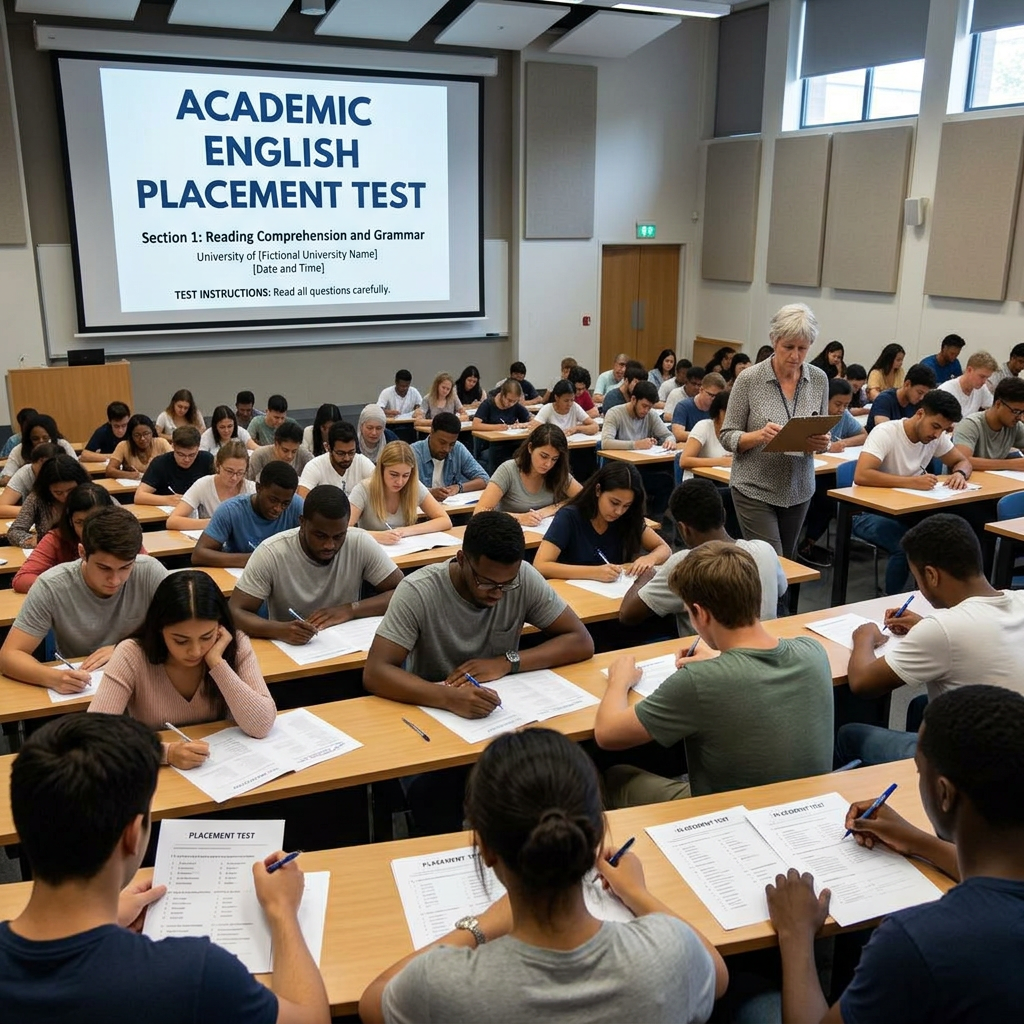
Nok’s Second Year · Day 25: A Major Decision and the Problem of Repeating Science
20 items · 15 minutes · Complete the Words · Read in Daily Life · Read an Academic Passage · a daily workout in the TOEFL iBT Reading format introduced in January 2026
How it works. This is a short daily workout in the TOEFL iBT Reading format used since January 2026. In fifteen minutes you complete damaged words in an academic text, read two everyday texts, and read a short academic passage. Every part follows one day in the second year of Nok, a Thai student at an American university, so the same words and ideas come back in different forms. A few minutes each day builds reading speed and vocabulary far better than one long session a week. Answer every item, then press Check My Score to see why each answer is right.
แบบฝึกประจำวันนี้ใช้รูปแบบข้อสอบ TOEFL iBT ส่วน Reading ฉบับมกราคม 2026 ใช้เวลาเพียง 15 นาที ได้แก่ เติมตัวอักษรที่หายไปให้เป็นคำในข้อความวิชาการ อ่านข้อความในชีวิตประจำวันสองชิ้น และอ่านบทความวิชาการสั้นหนึ่งบท ทุกส่วนเล่าเรื่องวันเดียวกันในชีวิตปีที่สองของนก นักศึกษาไทยในมหาวิทยาลัยอเมริกัน คำศัพท์และความรู้จึงวนกลับมาให้เห็นซ้ำ การฝึกวันละไม่กี่นาทีได้ผลดีกว่าการฝึกนาน ๆ สัปดาห์ละครั้ง ทำให้ครบแล้วกด Check My Score เพื่อดูคำอธิบายทุกข้อ
Part 1A · Research Methods 250 reading: Why replication matters
The spring semester has begun, and Nok has finally declared her major. Her first required course is Research Methods 250. Complete the words in the first reading. The first half of each damaged word is given; type the missing letters.
In science, a single study is rarely enough to anything. Other researchers must be to repeat the study and get results. This process is replication. In 2015, a large tried to repeat 100 published psychology . Only about third to one half of the results were , depending how success was .
Part 2A · An email from the advising office
Nok receives this email at the start of the spring semester. Read it and answer the questions.
Subject: Major declaration approved
Dear Kanokwan,
Congratulations! Your declaration of a major in Psychology, with a minor in Economics, has been approved. Your new faculty advisor is Prof. Daniel Okafor. Please schedule a meeting with him before February 15 to plan your remaining courses. Note that Research Methods 250 is required for all Psychology majors and should be completed by the end of your second year.
Academic Advising Office
Part 2B · A chat with Jamal
Read the everyday text and answer the questions.
Jamal: So it’s official? Psychology?
Nok: Yep! The paradox of choice is over, haha.
Jamal: Congrats! Did taking one more class in each subject help?
Nok: Totally. I realized I kept reading my psych textbook for fun.
Part 3A · Why Some Findings Fail to Repeat
This passage is from Nok’s Research Methods 250 textbook. Read it and answer the questions.
When a published result cannot be repeated, it does not usually mean that the original researchers were dishonest. More often, the problem lies in ordinary features of how research has been done and published.
One factor is small samples. A study with only a few dozen participants can produce a striking result simply by chance. Another factor is flexibility in analysis: when researchers try several ways of analyzing their data, at least one may produce an impressive-looking result even if no real effect exists.
Publishing practices also play a role. Journals have traditionally preferred new and surprising findings. Studies that found nothing were often left unpublished, a situation sometimes called the file drawer problem. As a result, the published record can make effects appear stronger and more reliable than they really are.
In response, many scientists now preregister their studies, publicly stating their hypotheses and analysis plans before collecting data. Larger samples, shared data, and journals that publish replication attempts are also becoming more common. These reforms may make research slower to produce headlines, but they aim to make it more trustworthy.
| Section | Correct | Percent |
|---|
Review every item
Discover more from EDUCATION FOR PEACE FOUNDATION
Subscribe to get the latest posts sent to your email.