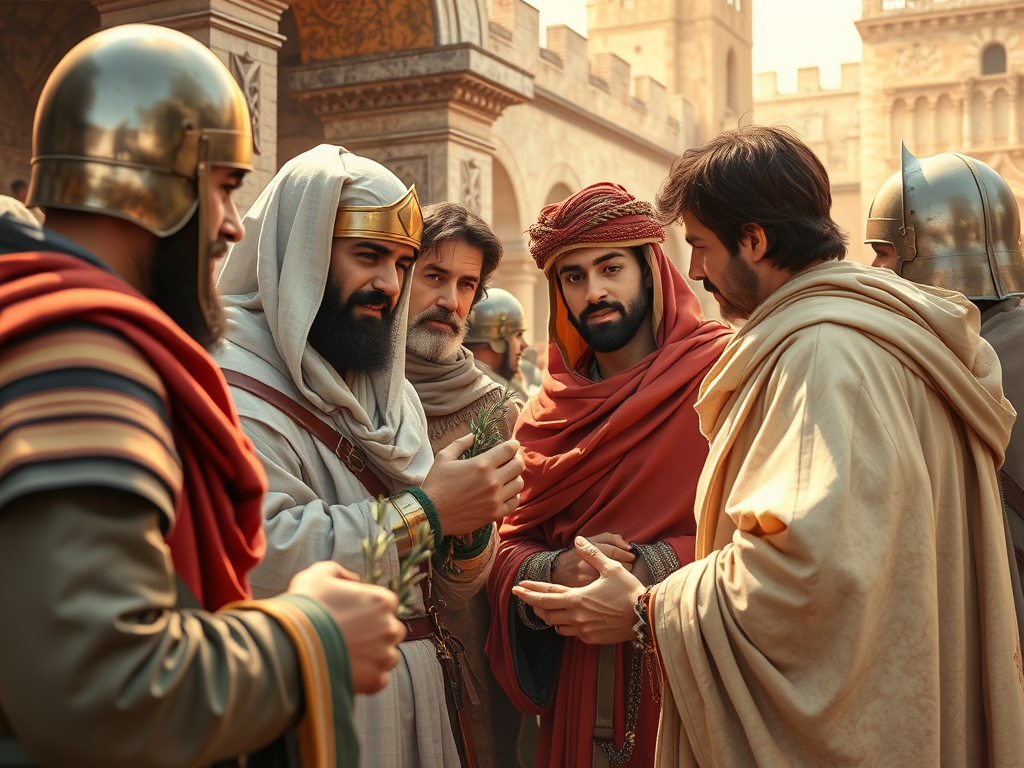
The Great AI Debate
60 items · 60 minutes · Speaking 50 points · Reading 50 points · follows the TGAT1 blueprint
How it works. This practice test follows the structure of the real TGAT1 English Communication test: Question–Response, short and long conversations, text completion, and reading comprehension. All parts share one setting, so the people and places you meet in Part 1 return in Part 2. Start the timer if you want exam conditions, answer every item, then press Check My Score.
ข้อสอบเสมือนจริงตามโครงสร้าง TGAT1 การสื่อสารภาษาอังกฤษ 60 ข้อ 60 นาที ทุกส่วนเล่าเรื่องในโลกเดียวกัน ตัวละครจากบทสนทนาจะกลับมาในบทอ่าน กดเริ่มจับเวลาหากต้องการฝึกเหมือนวันสอบจริง ทำให้ครบแล้วกด Check My Score เพื่อดูคะแนนและคำอธิบายทุกข้อ
Part 1A · Question–Response: Debate season
Praew, a Grade 12 student in Nakhon Pathom, joins an English debate competition on whether students should use AI tools for homework. Choose the most appropriate response to each line she hears or says.
Part 1B · Short conversation 1: The motion
Choose the best option to complete the conversation.
Ajarn Somjai: The motion for the final is: “This house would allow students to use AI tools for homework.”
Praew: Proposition. So we’re for it.
Ohm: But I’m not sure I agree with it.
Ajarn Somjai: That doesn’t matter in debate.
Part 1B · Short conversation 2: Preparing arguments
Choose the best option to complete the conversation.
Praew: Our first argument is that students are using AI anyway.
Ohm: Then the question isn’t whether to allow it, how to use it responsibly.
Praew: Exactly. And our second argument: AI can give instant feedback a teacher with forty students can’t.
Ohm: They’ll say students won’t learn to think for themselves.
Part 1B · Short conversation 3: Before the final
Choose the best option to complete the conversation.
Ohm: Praew, the other team won the national championship last year.
Praew: Maybe. But they don’t know our arguments.
Ohm: You’re right. And we’ve practised more than ever.
Praew: Let’s just do our best and enjoy it.
Part 1C · Long conversation 1: The final debate
Choose the best option to complete the conversation.
Opposition speaker: Our opponents say AI helps students learn. If a machine writes your essay, you haven’t learned to write.
Praew: Point of information!
Opposition speaker: Yes, briefly.
Praew: If a student asks AI to explain a difficult idea and then writes the essay herself,
Opposition speaker: That’s a rare case. Most students will take the easy path.
Praew: Do you have evidence for that?
Opposition speaker: Our evidence comes from teachers’ experiences.
Part 1C · Long conversation 2: The judge’s feedback
Choose the best option to complete the conversation.
Judge: Congratulations to both teams. The decision was very close.
Praew: Thank you. What could we have done better?
Judge: Your arguments were creative, but you more evidence. Personal examples are useful, but they aren’t enough on their own.
Ohm: The other team used teachers’ experiences. Isn’t that also personal?
Judge: But they also cited a survey of a thousand students, which strengthened their case.
Praew: So the winning side was the opposition?
Judge: By one point. Your point of information in the final was the best moment of the competition.
Part 2A · Text completion 1: The competition rules
Choose the best word or phrase for each gap in the text.
National Schools English Debate Championship · Rules
Each debate involves two teams of three speakers. The Proposition team argues the motion, and the Opposition team argues against it. Teams are told which side they will argue only fifteen minutes before each debate, they must prepare for both sides.
Each speaker has five minutes. During the middle three minutes of each speech, members of the opposing team may offer a “point of information”, a short question or comment. The speaker may accept or it.
Speakers may use notes, they may not use phones, laptops or other electronic devices during the debate. Any team breaks this rule will lose the debate.
Judges will score each team on three areas: the content of their arguments, the of their delivery and their strategy, including how well they respond to the other team.
Respect is essential. Speakers may criticise their opponents’ arguments, but personal attacks are not allowed. The aim of debate is not only to win to think more clearly about difficult questions.
Part 2A · Text completion 2: Praew’s reflection
Choose the best word or phrase for each gap in the text.
What Losing a Debate Taught Me About AI · by Praew Chantawong, Grade 12
When our team was told we would argue in favour of allowing AI for homework, my partner Ohm was unhappy. He believed AI makes students lazy. I was more optimistic, but I had never really thought about the question carefully.
Preparing for the debate forced us to both sides. We read articles, interviewed teachers and asked classmates how they used AI. Some admitted they copied answers. Others used it to explain ideas they did not understand in class, they would never have dared to ask in front of their friends.
In the final, we lost by a single point. The judge told us our arguments were creative, but we needed evidence. She was right. We had relied on personal stories, while the other team had a survey of a thousand students.
What surprised me most was how my own opinion changed. I still believe that banning AI is unrealistic. , I now understand why teachers worry. A tool that can explain can also replace thinking, if students use it carelessly.
Perhaps the real question is not whether students use AI, but they use it. Schools need to teach students how to ask good questions, check answers and do their own thinking. That is a skill no machine can learn us.
Debate did not give me a final answer. It gave me something more : the habit of looking at a question from both sides.
Part 2B · Reading 1: The final’s scoresheet
Read the text and answer the questions.
Grand Final Scoresheet · Motion: This house would allow students to use AI tools for homework
Proposition (Nakhon Pathom Phatthana School): Content 34/40 · Delivery 27/30 · Strategy 23/30 · Total 84
Opposition (Bangkok Riverside School): Content 36/40 · Delivery 25/30 · Strategy 24/30 · Total 85
Best speaker of the final: Praew Chantawong (Proposition)
Judge’s comment: An outstanding final. The Proposition’s delivery was the strongest of the tournament, and their point of information on independent learning was excellent. The Opposition won on the strength of their evidence, especially the student survey, and their careful responses to the Proposition’s best arguments.
Part 2B · Reading 2: An article about AI in education
Read the text and answer the questions.
The Tool That Can Teach or Replace Thinking
Since AI chatbots became widely available, schools around the world have struggled to decide how to respond. Some banned them at first, worried that students would use them to write essays and answer homework questions. Many of those bans were later relaxed, partly because they were difficult to enforce and partly because teachers began to see possible benefits.
Early research suggests that the effects of AI depend heavily on how it is used. In several studies, students who used AI to get hints, explanations and feedback on their own work learned more than students without AI. However, students who used AI simply to produce answers often performed worse on later tests taken without it. They had completed their work, but they had not learned from it.
This finding matches what psychologists have long known about learning. Memory and understanding grow through effort: struggling with a problem, making mistakes and correcting them. A tool that removes all difficulty may also remove much of the learning.
As a result, many educators now argue that the key question is not whether students should use AI, but how they should use it. Some schools are designing assignments that require students to explain their reasoning, compare AI answers with other sources or improve on AI-generated drafts.
There are also concerns beyond learning. AI tools can produce confident but incorrect answers, and they may reflect biases found in the data used to build them. Students therefore need to learn to question the tools, not only to use them.
Part 2B · Reading 3: A letter from Ohm
Read the text and answer the questions.
A note to Praew after the final
Praew,
I know you’re disappointed. So am I. One point! But I wanted to write this down because I don’t think I said it properly yesterday.
When the competition started, I thought this motion was obvious. AI makes students lazy, so it should not be allowed. I only argued for it because we had to.
Then we started interviewing people. I talked to my younger cousin, who has dyslexia and has always found reading difficult. She uses AI to read long texts aloud and to explain difficult words. She told me that for the first time she feels like she can keep up with her class. I had never thought about students like her.
I still think some students use AI to avoid work. But I don’t think the answer is a ban anymore. I think it’s teaching, the way you said in your last speech.
So thank you. We lost the debate, but I think I won something more important. I changed my mind, and I can explain why.
See you at practice on Monday. Next year, we’re winning.
Ohm
| Section | Correct | Points |
|---|
Review every item
Discover more from EDUCATION FOR PEACE FOUNDATION
Subscribe to get the latest posts sent to your email.