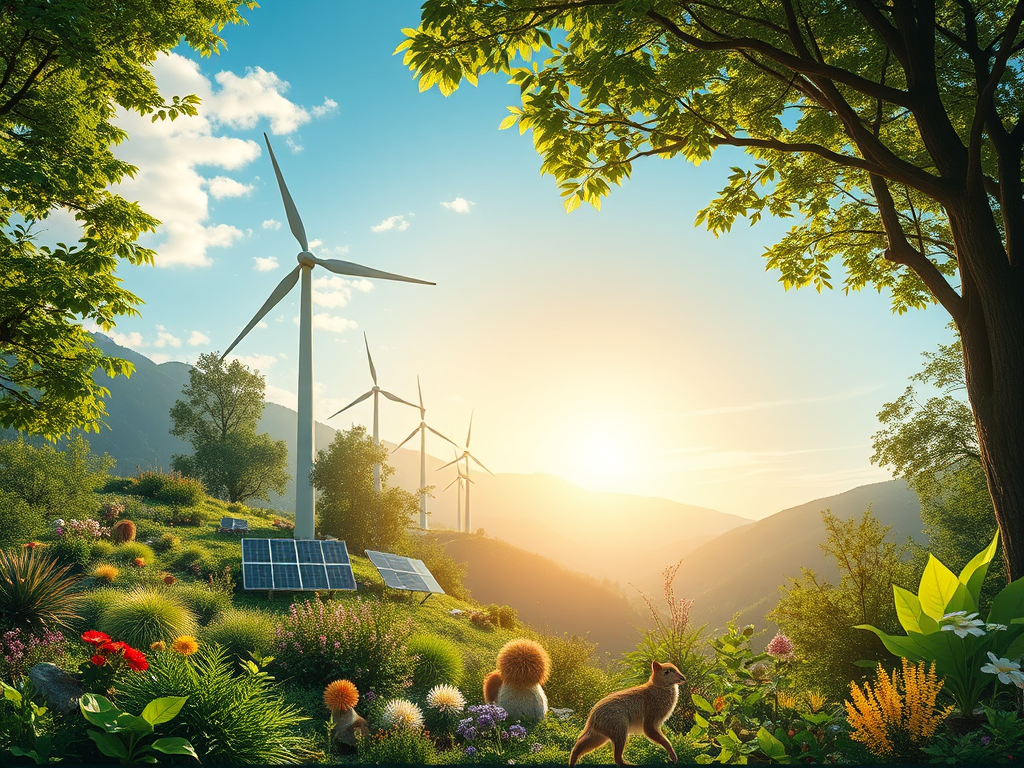
Environment & Climate Adjectives
Explore 25 adjectives commonly used in environmental and climate discussions.
Environment & Climate Adjectives
- Sustainable – Capable of being maintained over time without depleting resources.
Example: The company focuses on sustainable energy solutions. - Ecological – Related to the interaction between living organisms and their environment.
Example: The ecological balance of the forest is being threatened by deforestation. - Environmental – Concerned with the protection of the natural world.
Example: Environmental policies aim to reduce pollution and waste. - Green – Related to environmentally friendly practices.
Example: The company introduced a new green packaging initiative. - Renewable – Capable of being replenished naturally over time.
Example: Wind and solar power are forms of renewable energy. - Non-renewable – A resource that cannot be replaced naturally at the same rate it is consumed.
Example: Coal and oil are non-renewable energy sources. - Endangered – At risk of extinction or destruction.
Example: The panda is an endangered species due to habitat loss. - Deforested – Cleared of trees, often for agriculture or urbanization.
Example: Large areas of the rainforest have been deforested for cattle grazing. - Polluted – Contaminated with harmful substances.
Example: The river was polluted by chemical waste from factories. - Biodegradable – Capable of decomposing naturally without harming the environment.
Example: The company switched to biodegradable packaging. - Carbon-neutral – Having a balance between emitting carbon and absorbing carbon emissions.
Example: The country aims to be carbon-neutral by 2050. - Contaminated – Made impure or polluted by harmful substances.
Example: The contaminated water supply caused a health crisis. - Energy-efficient – Using less energy to perform the same task.
Example: New energy-efficient appliances help reduce electricity bills. - Recyclable – Able to be processed and used again.
Example: Glass bottles are fully recyclable. - Organic – Produced without synthetic chemicals.
Example: Organic farming avoids the use of pesticides. - Conservation-focused – Prioritizing the protection of natural resources.
Example: The park’s conservation-focused initiatives help protect endangered species. - Protected – Legally safeguarded from harm or destruction.
Example: The rainforest is a protected area under federal law. - Climate-resilient – Capable of adapting to and withstanding climate change impacts.
Example: The city invested in climate-resilient infrastructure. - Eco-friendly – Not harmful to the environment.
Example: Many companies now offer eco-friendly alternatives to plastic bags. - Emission-heavy – Producing a large amount of emissions.
Example: Coal plants are among the most emission-heavy industries. - Toxic – Containing poisonous substances harmful to living organisms.
Example: Toxic waste was illegally dumped into the river. - Waterborne – Carried or transmitted through water.
Example: Cholera is a waterborne disease. - Atmospheric – Relating to the Earth’s atmosphere.
Example: Atmospheric pollution is a major global concern. - Degradable – Capable of breaking down naturally over time.
Example: Degradable plastics are an alternative to conventional plastics.
Discover more from EDUCATION FOR PEACE FOUNDATION
Subscribe to get the latest posts sent to your email.