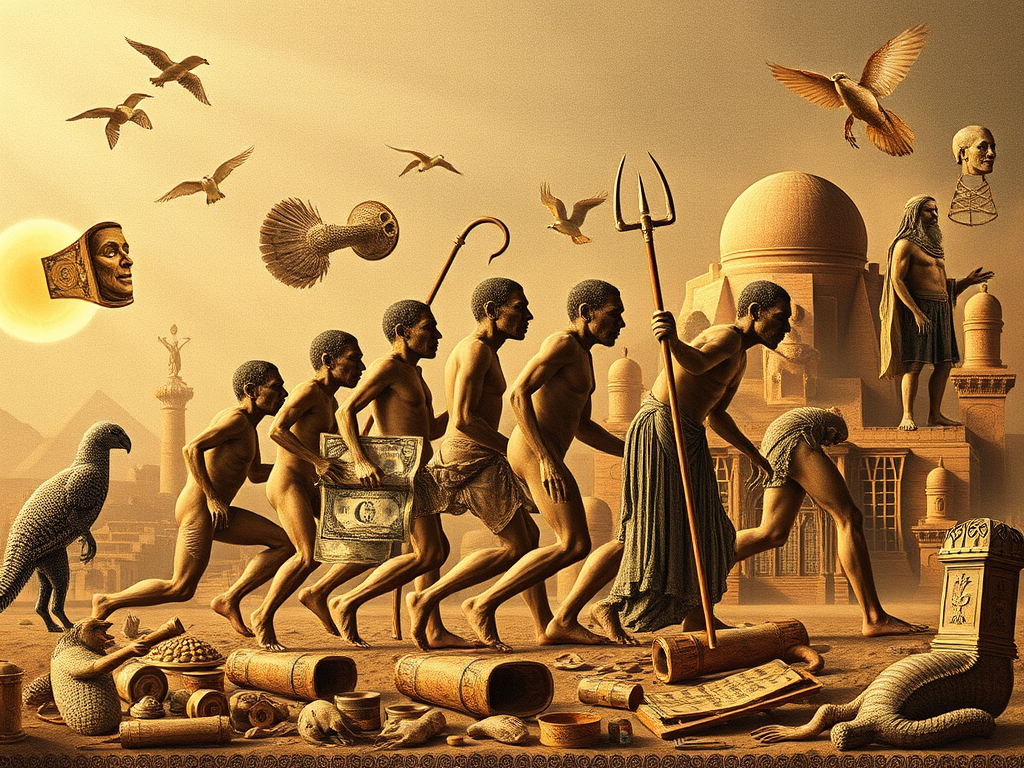
Sapiens: A Brief History of Humankind
Rationale for Reading
Sapiens is an essential read for global citizens because it provides a comprehensive overview of humanity’s shared history, tracing the evolution of Homo sapiens and how our species has shaped the world. In a time where globalization has brought people closer, understanding our common origins and the cultural, scientific, and societal revolutions that have influenced humanity helps bridge divides and foster mutual respect.
Key Points
- The Cognitive Revolution: Harari begins by exploring the emergence of Homo sapiens around 200,000 years ago, highlighting how our species’ unique ability to communicate complex ideas gave us a survival advantage. This “shared fiction” enabled large-scale cooperation through myths, religions, and cultures.
- The Agricultural Revolution: About 10,000 years ago, humans transitioned from hunter-gatherer lifestyles to agriculture. While this revolution increased food production, it also led to social hierarchies, the domestication of animals, and economic inequality. Harari provocatively suggests that humans may have domesticated themselves in the process.
- The Unification of Humankind: Harari identifies three key unifying forces—money, empires, and religions—that brought disparate human communities together under shared systems of belief and governance. These forces enabled unprecedented collaboration but also fueled conflicts and power struggles.
- The Scientific Revolution: Beginning in the 16th century, this revolution marked humanity’s shift toward experimentation, observation, and the pursuit of knowledge. It led to technological advances, industrialization, and the modern capitalist economy. Harari discusses how this revolution continues to shape global power dynamics.
- The Anthropocene: Harari explores the impact of humans on the planet, emphasizing the ecological toll of industrialization and the ethical dilemmas posed by advancements like genetic engineering and artificial intelligence. He urges readers to reflect on humanity’s responsibility to create a sustainable future.
- The Fragility of Happiness: Despite technological and economic progress, Harari questions whether humanity is happier today than in the past. He links this to the ways modern systems prioritize growth over well-being and urges us to rethink our values and priorities.
Essence of Sapiens
At its core, Sapiens is a call to critically examine the systems and beliefs that shape our lives. It challenges us to question “inevitable” progress and reconsider our impact on the world and each other. By understanding our collective past, we can better navigate the complexities of the present and chart a more equitable and sustainable path for the future.
Discover more from EDUCATION FOR PEACE FOUNDATION
Subscribe to get the latest posts sent to your email.